Piikani Niitsi’powahsini Curriculum
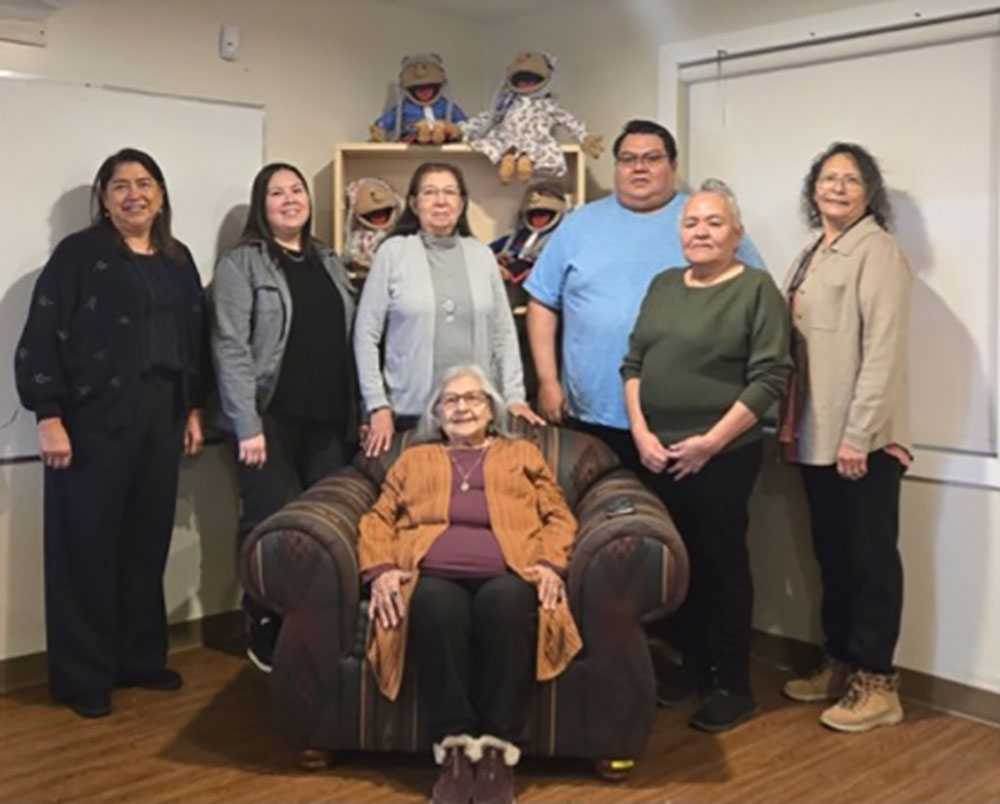
In June 2016, Peigan Board of Education Society met with Piikani Elders to discuss a new ten-year Piikani Niitsi’powahsini language revitalization plan. Piikani Elders wholeheartedly supported this initiative asking that Peigan Board of Education Society focus on changing in-school curriculum and instruction. Piikani Elders decided upon twenty-seven values that Piikani children be taught as a means of building a strong Piikani identity. Thus began a ten-year journey to create a new values-based language learning model which reflects our Piikani ways of knowing and is encapsulated within the Piikani Niitsi’powahsini Curriculum and Instruction guide. This work was guided by the Piikani Niitsi’powahsini Language Working Group (see acknowledgements).
Working with Blackfoot K-12 Program of Studies – Alberta Education (2010)
A comprehensive review of the Blackfoot K-12 Program of Studies – Alberta Education (2010) was completed in the early years of this journey. It was noted that throughout the Blackfoot K-12 Program of Studies a focus on linguistic structure and grammar was substantial and that the curriculum content was subjective and out of sync with how students traditionally learned Blackfoot. Upon completion of the review, the Piikani Niitsi’powahsini Language Working Group made the decision to follow the four overarching components from the Blackfoot K-12 Program of Studies (2010, p. 3) Conceptual Model, as listed below:
Applications deal with what the students will be able to do with the language, the functions they will be able to perform and the contexts in which they will be able to operate.
Language Competence addresses the students’ knowledge of the language and their ability to use that knowledge to interpret and produce meaningful texts appropriate to the situations in which they are used.
Community Membership aims to develop the understandings, views and values of Blackfoot culture.
Strategies help students learn and communicate more effectively and more proficiently.
Using a curriculum map, the Piikani Niitsi’powahsini Language Working Group began to apply the twenty-seven values gifted by Piikani Elders to all grades starting at Kindergarten K4/K5 to Grade 12 aligning them with language learning and child development models.
The values-based language learning curriculum map and subsequent themes and lessons were influenced by the four overarching components.